Artists as Activists
Consider these Questions:
• What do these three pieces have in common?
• What do you think they have in mind when they talk about progressive literature, or aligning art with progress?
• What do each of the authors think about the relationship of art and literature to society?
• What role do they think the state should play in guiding/directing literature and art?
• Why does Belinsky feel so betrayed by Gogol?
• Why, according to Trotsky, does art have to be aligned with its epoch? What are the implications of that view?
• What are the implication of Zhdanov’s phrase “an engineer of human souls?”
____________________________________________________________________
** Soviet Union Reign : 1922 -1991
Vissarion Grigoryevich Belinsky
( 1811 - 1848 )

- Russian literary critic ( mostly during the 1830's - 1840's )
Leon Trotsky
( 1879 - 1940 )
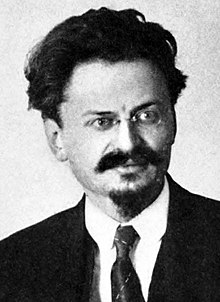
- Founder of the Soviet Red Army and significant leader of Russian Revolution of 1917
Andrei Alexandrovich Zhdanov
( 1896 - 1948 )

- Stalin's successor-in-waiting who lived by his ideological code: the Zhdanov doctrine, which was intended to create a philosophy on artistic validity for the entire world.
____________________________________________________________________
Zdhanov's Speech on Soviet Literature
- language
- power of oral speech and vocal tonation
- "comrades"
- gave a doctrine of "socialist realism", the only acceptable model of writing for Soviet authors/musicians at the time
- suggested an end to freedom of creative experimentation and elimination of nonconforming subject matter
❝ Create works of high attainment, of high ideological and artistic content. Actively help to remold the mentality of people in the spirit of socialism. Be in the front ranks of those who are fighting for a classless socialist society. ❞
- Zhdanovism : Suggested that the world was divided into the "imperialistic" (USA) and the "democratic (USSR)
Trotsky's Literature and Revolution
- Discussions and analyzations of the consciousness of writers during that time, whilst discussing art being a way that the ruling class should ignite as the bourgeoisie
- He suggests that the proletariat's mission in power with art is to fully understand cultural achievements of the past and to then lay a foundation for the cultures in art of the future.
❝ If the Revolution has the right to destroy bridges and art monuments whenever necessary, it will stop still less from laying its hand on any tendency in art which, no matter how great its achievement in form, threatens to disintegrate the revolutionary environment or to arouse the internal forces of the Revolution, that is, the proletariat, communist policy toward art, the peasantry and the intelligentsia, to a hostile opposition to one another. Our standard is, clearly, political, imperative and intolerant. But for this very reason, it must define the limits of its activity clearly. (220) ❞
Belinsky's Leetter to Gogol
- Heavily criticized autocracy, serfdom, poverty, prostitution, cruelty to the "less powerful"
- Criticized Gogol's book Selected Passages of Correspondence with Friends (1847) as damaging for eulogizing autocracy, serfdom, and the Orthodox Church and its power
❝ And here the public is right, for it looks upon Russian writers as its only leaders, defenders and saviours against Russian autocracy, orthodoxy, and nationality, and therefore, while always prepared to forgive a writer for a bad book, will never forgive him for a pernicious book. ❞
- Completes the message with telling Gogol to quit writing entirely if he continues with the ideals that the book expresses
- States that art is an acceptable expression, except for Gogol's expression
- Feels betrayal to a very high degree
❝ Yes, I loved you with all the passion with which a man, bound by ties of blood to his native country, can love its hope, its honour, its glory, one of the great leaders on its path of consciousness, development and progress. ❞
____________________________________________________________________
- Manipulation of language through power; how power seems to play a role in all of their expressions and beliefs.
- Genre; Gogol's book creating an uproar and such a powerful reply versus a speech that gives a positive connotation whilst hiding a darker truth.
- Strictly focused on the relationship between art and politics, as well as the future of a very large society.
- "Freedom of speech", but only if done correctly.
- "Creativity in art", but only if the people approve.
- Limiting artistic creativity.

No comments:
Post a Comment